
Quick Answer
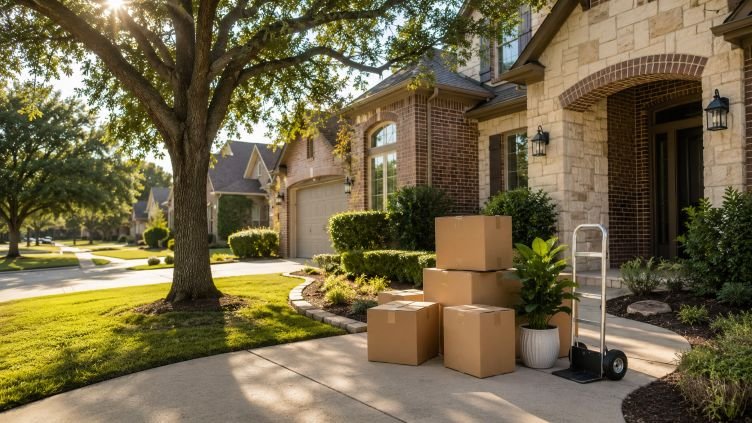
Moving to West Houston can provide access to varied housing, major employment centers, shopping, healthcare, parks and established communities. However, “West Houston” covers several distinct areas, so housing costs, commutes, property taxes, school assignments, flood exposure and insurance expenses vary considerably. Compare exact addresses and total monthly costs before deciding where to live.
Moving to a new part of Houston is more than finding a suitable house. Your location can influence how long you spend commuting, which roads you use, what services are nearby and how much you pay for housing, insurance and property taxes.
West Houston offers everything from established tree-lined subdivisions and townhomes to gated developments, apartments and new construction. That variety creates opportunity—but it also means that two homes only a few miles apart can offer very different experiences.
This relocation guide will help you understand the area, compare your options and avoid common mistakes before making your move.
Key Takeaways
- West Houston is a broad region, not one officially defined neighborhood.
- Housing options range from apartments and townhomes to established houses, gated communities and new construction.
- Interstate 10, Beltway 8, Westpark Tollway, Westheimer Road and Eldridge Parkway are important travel corridors.
- School districts and individual campus assignments must be confirmed for the exact address.
- Property taxes, insurance, HOA dues and flood coverage should be included in every housing comparison.
- Visiting a neighborhood at different times provides more useful information than relying solely on online descriptions.
- The right location depends on your budget, commute and daily needs—not on a universal neighborhood ranking.
What Is Considered West Houston?
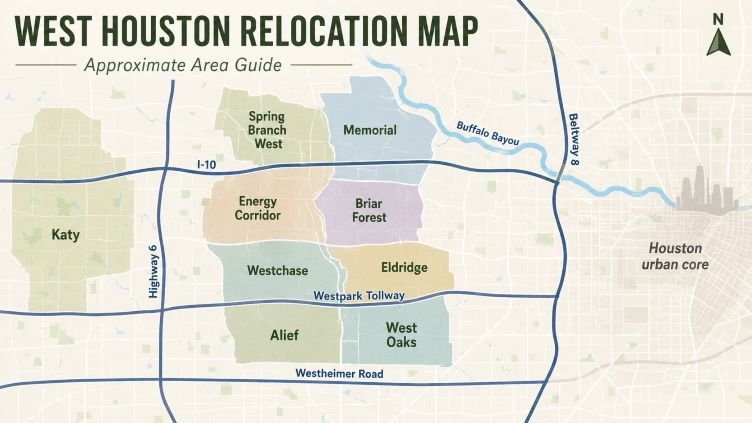
West Houston is a commonly used geographic description rather than one municipality or neighborhood with universally accepted boundaries.
For relocation purposes, the term usually refers to communities west of central Houston around Interstate 10, Beltway 8, Westheimer Road, Westpark Tollway and the western city limits. Depending on the source, it may include or overlap with:
- Energy Corridor
- Memorial and Memorial West
- Briar Forest
- Westchase
- Spring Branch West
- Eldridge
- West Oaks
- Royal Oaks
- Lakes on Eldridge
- Parts of Alief
- Communities approaching Katy
Because definitions differ, always check the address and map location of a property described as being in “West Houston.” A home near Memorial City may be many miles from another home marketed under the same general term.
Is West Houston a Good Place to Live?
West Houston can suit people who want varied housing, access to western employment centers and a combination of residential communities and urban conveniences.
Whether it is right for you depends on your commute, housing budget, preferred property type and proximity to the services you use regularly.
Potential advantages
- Broad range of housing styles and prices
- Access to the Energy Corridor and Westchase business districts
- Established neighborhoods and newer developments
- Shopping, restaurants and healthcare facilities
- Parks and trails in several areas
- Access to major highways and toll roads
- Housing options with yards, pools or community amenities
Important tradeoffs
- Traffic can make short distances take longer than expected
- Many daily trips require a vehicle
- Toll-road expenses can add to the monthly budget
- Property taxes vary by address and jurisdiction
- Some communities have mandatory HOA dues
- Flood and drainage risk requires property-specific research
- Hot summers can increase cooling and maintenance expenses
- Older homes may need significant repairs or system replacements
West Houston should not be treated as uniformly suitable or unsuitable. The most useful approach is to compare individual properties and locations using objective information.
Which West Houston Areas Should You Consider?
Each West Houston area offers a different balance of housing, access, amenities and recurring costs.
| Area | General housing character | Useful access | What to investigate |
|---|---|---|---|
| Energy Corridor | Townhomes, apartments and established detached homes | I-10, employers and Buffalo Bayou trails | Traffic, drainage, property age and insurance |
| Memorial West | Established homes, townhomes and selected new construction | I-10, Memorial City and western employment centers | Price, renovations, taxes and school assignment |
| Briar Forest | Established subdivisions, apartments and townhomes | Westheimer, Beltway 8, Westchase and Energy Corridor | Commute, drainage, HOA rules and nearby development |
| Westchase | Condos, townhomes, apartments, gated communities and detached homes | Beltway 8, Westpark Tollway and office districts | HOA costs, traffic and surrounding land uses |
| Spring Branch West | Older homes, redevelopment and newer construction | I-10 and Memorial-area destinations | Property condition, construction quality and location |
| Eldridge and West Oaks | Detached homes and planned communities | Highway 6, Westheimer and western commercial areas | Taxes, commute, flood information and HOA restrictions |

These descriptions are only starting points. A street-level visit and property-specific investigation should guide your decision.
For a deeper comparison, read our guide to the best neighborhoods in West Houston.
Not sure which part of West Houston fits your move?
Complete our buyer form and share your budget, workplace, timeline and preferred home features. We can use those priorities to help narrow your West Houston search.
What Kind of Housing Is Available?
West Houston contains a wide selection of rental and ownership options.
Established single-family homes
Many communities offer detached houses built in earlier decades. These homes may provide larger lots, mature landscaping and established surroundings, but buyers should inspect roofs, foundations, plumbing, electrical systems, HVAC equipment and drainage.
Townhomes and condominiums
Townhomes and condos may appeal to residents seeking lower-maintenance living or proximity to business and commercial districts. Compare HOA dues, association reserves, insurance responsibilities, parking and exterior-maintenance obligations.
New-construction homes
New homes are available in larger developments and smaller infill projects. Investigate the builder, warranty, inspections, upgrade costs, tax estimate, HOA and surrounding development plans.
Apartments and rental homes
Renting can provide flexibility for newcomers who want time to understand the area before purchasing. Compare renewal terms, utility costs, parking, commute and renter-insurance requirements.
Gated and amenity-based communities
Some communities offer controlled entrances, pools, lakes, trails or other shared amenities. A gate should not be interpreted as a guarantee of security. Review access procedures, HOA rules, recurring fees and maintenance responsibilities.
Gated communities in West Houston
Lakefront and Waterfront homes in West Houston
Should You Rent or Buy When Moving to West Houston?
The right choice depends on your timeline, finances and familiarity with the area.
| Consideration | Renting may suit you when… | Buying may suit you when… |
|---|---|---|
| Length of stay | Your plans may change soon | You expect to remain longer |
| Location knowledge | You want time to explore | You understand the area you prefer |
| Upfront cash | You want lower initial commitments | You have funds for closing and reserves |
| Maintenance | You prefer landlord responsibility | You accept ownership expenses |
| Flexibility | You may change jobs or locations | Stability is more important |
| Personalization | Major changes are unnecessary | You want greater control over the home |
Renting first is not always wasted money, and buying immediately is not always the better financial decision. Calculate the complete cost of each option based on your actual circumstances.
If purchasing is your goal, explore our homes for sale in West Houston and read the complete guide to buying a home in West Houston.
Most affordable neighborhoods in West Houston
How Much Does It Cost to Live in West Houston?
There is no single West Houston cost-of-living figure that applies to every household. Housing, transportation, insurance and utilities depend heavily on the property and location.
Include the following in your relocation budget:
- Rent or mortgage payment
- Security deposit or down payment
- Closing costs
- Property taxes
- Homeowners or renters insurance
- Flood insurance
- HOA dues
- Electricity and water
- Internet and moving expenses
- Vehicle and toll-road costs
- Home maintenance
- Childcare or school-related expenses, where applicable
- Deposits and service-connection fees
Compare the complete monthly cost
| Expense | Location A | Location B |
|---|---|---|
| Housing payment | Estimate | Estimate |
| Property taxes or renter charges | Verify | Verify |
| Insurance | Obtain quotation | Obtain quotation |
| HOA or community fees | Verify | Verify |
| Utilities | Estimate | Estimate |
| Transportation and tolls | Estimate | Estimate |
| Maintenance | Estimate | Estimate |
| Total | Calculate | Calculate |
A less expensive home farther from work may create higher transportation costs. A newer property may reduce immediate repairs but carry higher taxes or HOA fees.
For a detailed breakdown, read our guide to the cost of buying a home in West Houston.
What Should You Know About Commuting?
Houston’s size makes commute planning an important part of relocation.
West Houston’s major routes include:
- Interstate 10
- Beltway 8/Sam Houston Tollway
- Westpark Tollway
- Westheimer Road
- Memorial Drive
- Richmond Avenue
- Eldridge Parkway
- Highway 6
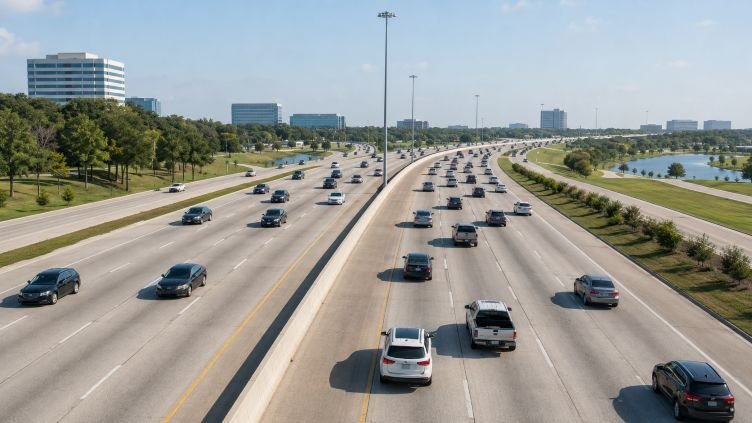
Traffic conditions can vary significantly by time, direction, construction and weather. Do not evaluate a commute using only the distance shown on a map.
Before choosing a home:
- Test the trip during your normal commuting hours.
- Compare toll and non-toll routes.
- Check trips to school, healthcare and grocery stores.
- Identify alternative routes.
- Consider how often you must travel.
- Review public-transit options for the exact address.
- Calculate monthly fuel, toll and parking expenses.
A home that saves 20 minutes on a frequently repeated trip may provide more daily value than extra space in a less convenient location.
What Schools Serve West Houston?
West Houston crosses multiple school-district boundaries. Depending on the exact address, a property may be served by:
- Houston Independent School District
- Spring Branch Independent School District
- Alief Independent School District
- Katy Independent School District
- Another district in the broader western area
The Texas Education Agency’s School District Locator provides approximate district boundaries and performance information. However, TEA explains that school attendance zones are determined by individual districts and should be confirmed directly with them. Texas Education Agency School District Locator
TEA released its 2026 accountability ratings in August 2026, and TXschools.gov allows users to search and compare schools by address. Ratings are useful, but they should be considered alongside programs, transportation, enrollment and individual student needs. Texas Education Agency
Never rely solely on a real-estate listing for school assignments. Boundaries and programs can change.
What Is the Lifestyle Like in West Houston?
Lifestyle varies by neighborhood, but residents may have access to shopping, dining, healthcare, parks and recreation throughout the broader area.
The City of Houston identifies several significant western-area destinations, including:
- Energy Corridor
- Westchase Corridor
- Memorial City Mall
- Town & Country Village
- Terry Hershey Park
- Mike Driscoll Park
- Arthur Storey Park
- Buffalo Bayou Hike and Bike Trail
- Memorial-area and West Houston medical facilities
City of Houston Westside area overview
Briar Forest residents also have access to routes connecting with I-10, Beltway 8, Westpark Tollway, Westheimer, Westchase and the Energy Corridor. The City highlights Terry Hershey Park and nearby trails among the area’s recreational resources. City of Houston Briar Forest overview
When comparing locations, consider how easily you can reach the amenities you will actually use. A park or shopping center may be nearby geographically but inconvenient to access during busy traffic.

Pet-friendly neighborhoods in West Houston
Parks and outdoor recreation in West Houston
What Should You Know About Houston’s Climate?
People moving from cooler or drier regions should prepare for Houston’s heat, humidity and severe-weather risks.
Practical considerations include:
- Air-conditioning condition and efficiency
- Insulation and window performance
- Roof age
- Drainage and grading
- Tree maintenance
- Irrigation needs
- Outdoor-shade availability
- Emergency supplies
- Insurance deductibles
- Hurricane and flood preparation
Request previous utility information when available, but remember that usage varies by household. Inspect the HVAC system before buying and include future replacement in your maintenance budget if the equipment is older.
How Should You Research Flood Risk?
Flood risk should be investigated for every property—not only homes inside a designated high-risk zone.
Use the exact address to:
- Search the FEMA Flood Map Service Center.
- Ask whether the house, garage or lot has flooded.
- Review the seller’s disclosure when purchasing.
- Investigate drainage and nearby bayous or channels.
- Ask about flood-related repairs.
- Obtain a flood-insurance quotation.
- Review elevation information when available.
- Check for planned drainage projects.
Most standard homeowners policies do not cover rising-water flood damage. The Texas Department of Insurance advises residents to consider separate flood insurance and notes that many flood policies have a waiting period before coverage begins. Texas Department of Insurance
A property’s flood-zone designation is important, but it is not a complete record of whether flooding has occurred or could occur.
What Should Homebuyers Know About Property Taxes?
Property taxes vary between West Houston addresses because different homes may fall under different cities, school districts and special taxing entities.
When evaluating a home:
- Search its appraisal-district record.
- Review the current appraised and taxable values.
- Identify all taxing jurisdictions.
- Check whether the seller has exemptions.
- Estimate the post-purchase tax bill.
- Investigate special taxing districts.
- Confirm homestead-exemption eligibility.
Do not assume your future tax payment will equal the seller’s current bill.
Eligible owner-occupants may qualify for a homestead exemption. Verify current rules and application requirements directly with the Harris Central Appraisal District.
For more information, read our dedicated guide to West Houston property taxes.
How Can You Evaluate a Neighborhood Before Moving?
Online research is helpful, but it should not replace firsthand investigation.
Visit the area:
- During the morning commute
- During the evening commute
- After dark
- On a weekend
- After heavy rain, when practical and safe
Observe:
- Traffic and road access
- Street and aircraft noise
- Drainage
- Property maintenance
- Lighting
- Sidewalks
- Parking
- Nearby businesses
- Construction
- Access to services
- Emergency-service proximity
For crime information, consult official law-enforcement data and compare consistent time periods and geographic boundaries. Avoid relying on unverified neighborhood rankings or subjective labels.
Our West Houston Neighborhood Safety Guide explains how to research crime, flooding, emergency services and environmental considerations objectively.
Need help comparing West Houston locations?
Tell us where you work, what type of home you want and what matters most in your move. Complete our buyer form once to begin a more focused property search.
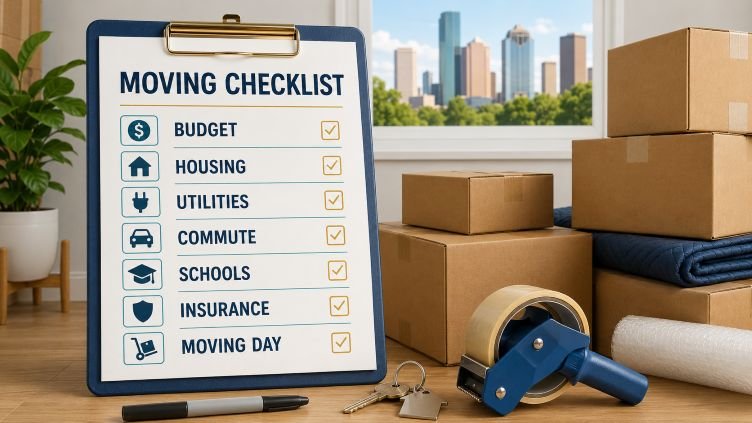
West Houston Relocation Checklist
Six to eight weeks before moving
- Establish your housing and relocation budget
- Compare West Houston areas
- Test likely commutes
- Research schools where applicable
- Obtain insurance estimates
- Review flood information
- Collect moving-company quotations
- Create an inventory of belongings
- Decide what to sell, donate or move
Two to four weeks before moving
- Confirm the moving date
- Arrange electricity and water service
- Arrange internet installation
- Update insurance
- Submit address changes
- Transfer medical and school records
- Prepare important documents
- Confirm parking or moving-access requirements
During the final week
- Confirm the mover and arrival window
- Photograph valuable belongings
- Pack medicine and documents separately
- Prepare an essentials box
- Confirm keys and access codes
- Complete the final walk-through
- Record meter readings where appropriate
- Keep water, snacks and weather-appropriate supplies available
Walkable neighborhoods in West Houston
After moving
- Update your driver’s license and vehicle information where required
- Confirm voter registration
- Test smoke and carbon-monoxide alarms
- Locate utility shutoffs
- Review emergency and severe-weather plans
- Learn trash and recycling schedules
- Apply for eligible property-tax exemptions
- Keep closing, lease and insurance documents securely
Common Relocation Mistakes to Avoid
Choosing by neighborhood name alone
Large geographic labels may hide important differences in location, taxes, housing and commute.
Underestimating travel time
Test actual routes during the hours you expect to drive.
Comparing only purchase prices or rents
Include insurance, taxes, HOA dues, utilities, tolls, repairs and deposits.
Assuming school assignments
Verify the exact address directly with the school district.
Ignoring insurance until the last moment
Obtain homeowners, renters and flood-insurance information early.
Skipping flood and drainage research
Review maps, disclosures, property history, elevation and drainage conditions.
Buying before understanding the area
If you remain uncertain, renting temporarily may provide time to evaluate neighborhoods without rushing into a purchase.
Related Questions
Is West Houston expensive?
West Houston includes both comparatively accessible and premium housing markets. Costs vary by neighborhood, property type and condition. Compare total housing, insurance, taxes, utilities and transportation expenses rather than using one regional average.
Do you need a car in West Houston?
Many locations and daily activities are easier to access by car, although public-transit and pedestrian conditions differ by address. Check your specific commute and regular destinations before moving.
Which neighborhood is best in West Houston?
There is no universally best neighborhood. The right location depends on your housing budget, commute, property preferences, amenities and individual needs.
Is West Houston prone to flooding?
Flood exposure varies from property to property. Search the exact address using official flood maps, ask about prior flooding, inspect drainage and obtain an insurance quotation.
Should I rent before buying?
Renting first may be useful if you are unfamiliar with Houston, expect employment changes or need time to compare areas. Buying may be appropriate when your finances, location preference and longer-term plans are established.
What housing can I find in West Houston?
Options may include apartments, townhomes, condominiums, established detached houses, gated properties, lake-oriented homes, luxury residences and new construction.
How early should I start planning my move?
Starting approximately six to eight weeks before the intended date gives you time to compare housing, obtain moving quotations, arrange services and organize documents. Competitive property searches or long-distance moves may require more time.
Is Moving to West Houston Right for You?
West Houston may suit people seeking housing variety, western employment access, established amenities and a choice between mature communities and newer development.
It is most likely to work well when you select the location around your real routine—not just an attractive listing or familiar neighborhood name. Test the commute, calculate complete housing costs, verify schools, investigate flood exposure and visit the area at different times.
A successful relocation is not simply reaching a new address. It is choosing a home and location that make daily life manageable after the boxes are unpacked.

Ready to Plan Your Move to West Houston?
Complete our buyer form and share your price range, preferred home type, workplace, moving timeline and must-have features. One request can help turn a broad relocation search into a focused list of West Houston options.